Łódźlooks different from most Polish cities
because it grew around a different ambition.
Textile mills, workers’ housing and manufacturers’ palaces tell the story of a nineteenth-century industrial metropolis. Today, art, film, design and the reuse of former factories give that landscape new purposes. This is a city for travelers who enjoy understanding how places change, not only admiring what has been preserved.Suggested stay
Region
Trip style
Explore this page
Have any other questions?
Need more information before planning your visit to Łódź? Get in touch with us to discuss your ideas, ask a question or explore options for your trip.
From industrial ambition to a creative city
Łódź expanded dramatically with the textile industry during the nineteenth century. Entrepreneurs, workers and craftspeople arrived from different backgrounds, creating a city whose history includes Polish, Jewish, German and Russian communities, among others. The familiar idea of a city of four cultures is a useful introduction, but no short label captures all the inequalities, exchanges and conflicts of industrial life.
The built environment makes those contrasts unusually visible. A manufacturer’s palace might stand near production halls and workers’ homes, allowing wealth, labor and paternalistic planning to be understood within a single landscape. The city’s interest lies not only in individual buildings but in how these elements relate to one another.
The Second World War brought the destruction of Jewish life and the history of the Litzmannstadt Ghetto. Memorial sites and surviving traces require their own careful interpretation. The postwar city then developed important artistic and film institutions, while later industrial decline left large complexes seeking new uses.
Contemporary Łódź is shaped by that ongoing adaptation. Some sites have become museums, cultural venues or commercial districts; others remain part of a changing urban fabric. A good visit avoids two simplifications: that the industrial past was only glamorous, or that every reused factory automatically represents successful regeneration.
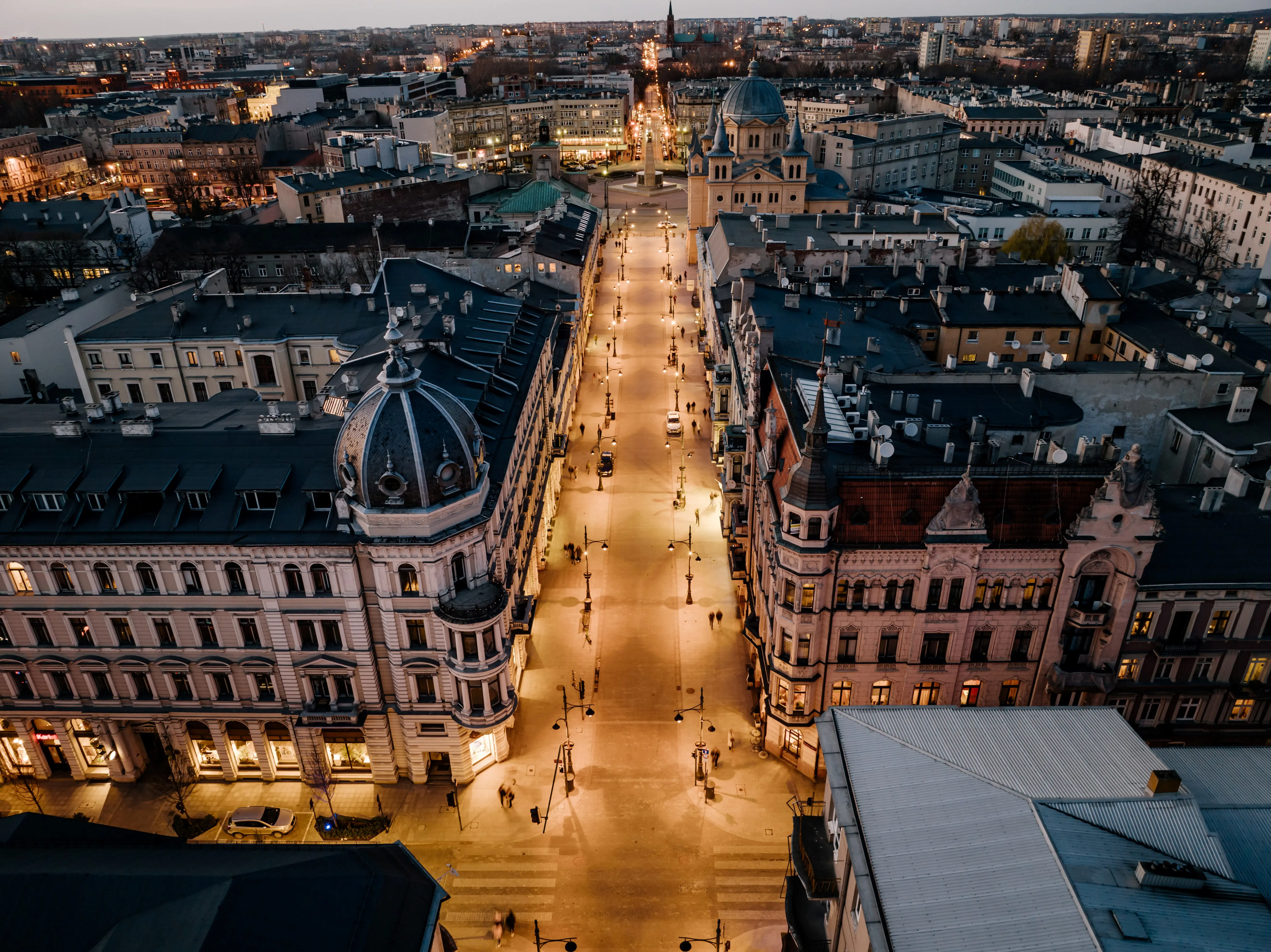
The industrial city in buildings and streets
Piotrkowska Street
Piotrkowska is the city’s most recognizable urban axis. Tenement facades, courtyards and commercial spaces reveal the scale of the industrial city and the aspirations of its residents. Look beyond the ground-floor businesses to see architectural details and differences between buildings.
A walk works best with selected stops rather than an attempt to cover the entire street as a single attraction. Public art, passages and smaller cultural spaces can create a varied route. The street also remains part of everyday Łódź, so leave time for a meal or café rather than treating it only as a corridor between museums.
Manufaktura and the Poznański factory complex
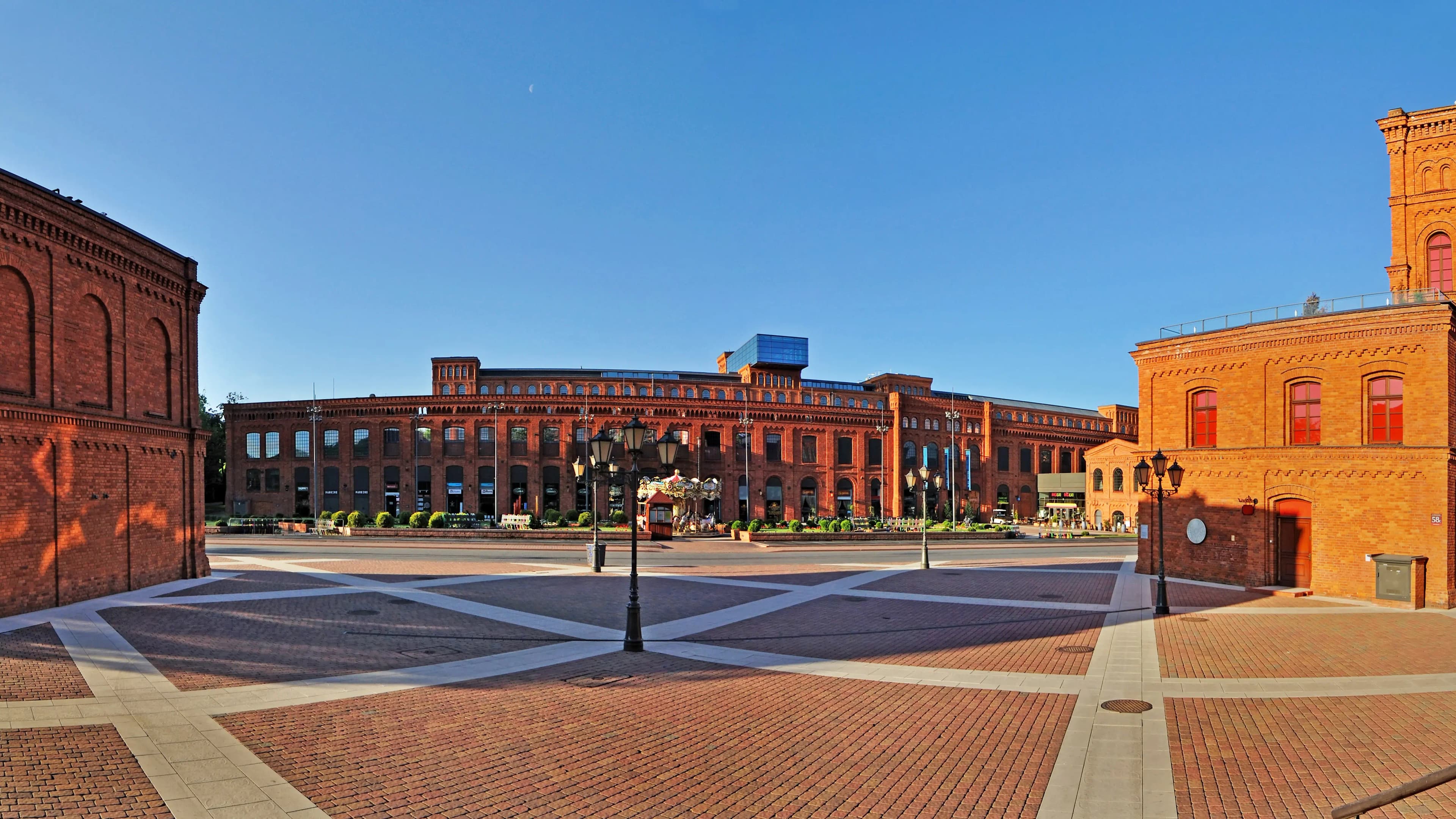
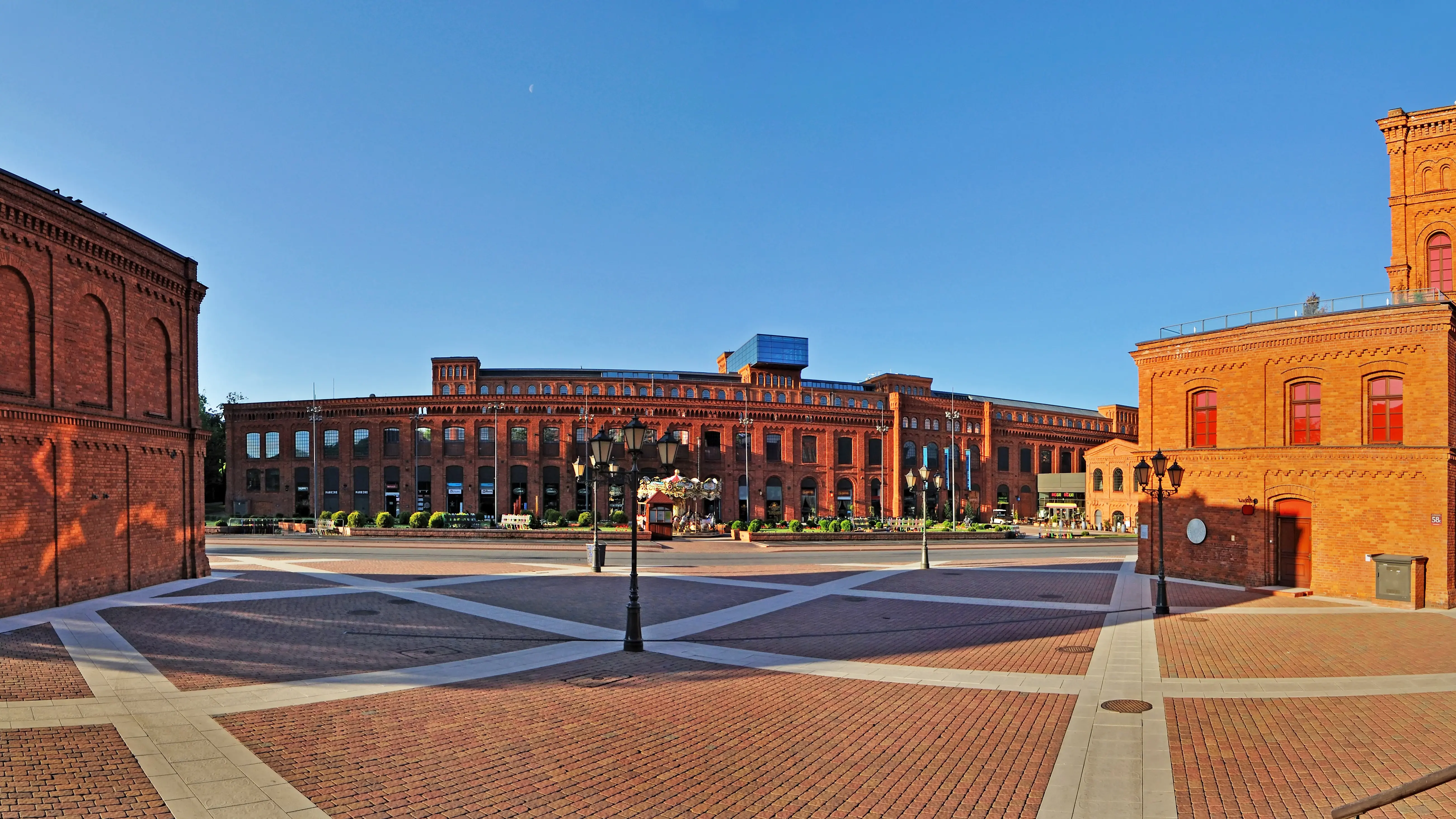
The former industrial complex associated with Izrael Poznański is now one of Łódź’s most visible examples of adaptive reuse. Large brick production buildings and open spaces preserve the scale of an enterprise that helped shape the city, even as their functions have changed.
The strongest visit connects the exterior landscape with an appropriate museum, such as the City Museum or ms². Shopping and dining are part of the present complex, but they should not replace an explanation of the industrial system behind it. This is an opportunity to discuss work, capital and urban transformation in a tangible setting.
Izrael Poznański Palace and the City Museum
The Poznański Palace expresses the wealth and representational ambitions of an industrial magnate. Its interiors and the City Museum’s collections help place individual success within the wider story of Łódź. The contrast with nearby factory buildings is central to the experience.
Do not treat the palace as an isolated decorative residence. Connect rooms, collections and the industrial landscape outside. The museum also introduces notable people and cultural life associated with the city, broadening the narrative beyond textiles alone. Current exhibition routes should guide how much time is reserved for the visit.
Księży Młyn
Księży Młyn is a particularly revealing industrial ensemble, associated with the Scheibler enterprise. Factory buildings, workers’ housing and related facilities show how production and daily life were organized together. The district is best understood through relationships between spaces, not a single photogenic facade.
A walk can explore paternalistic planning, community life and the changing uses of industrial heritage. It is also a residential area, so courtyards and homes are not unrestricted visitor attractions. Combine it with a museum or residence that adds context, and allow time to absorb the scale rather than turning it into a quick stop between distant locations.
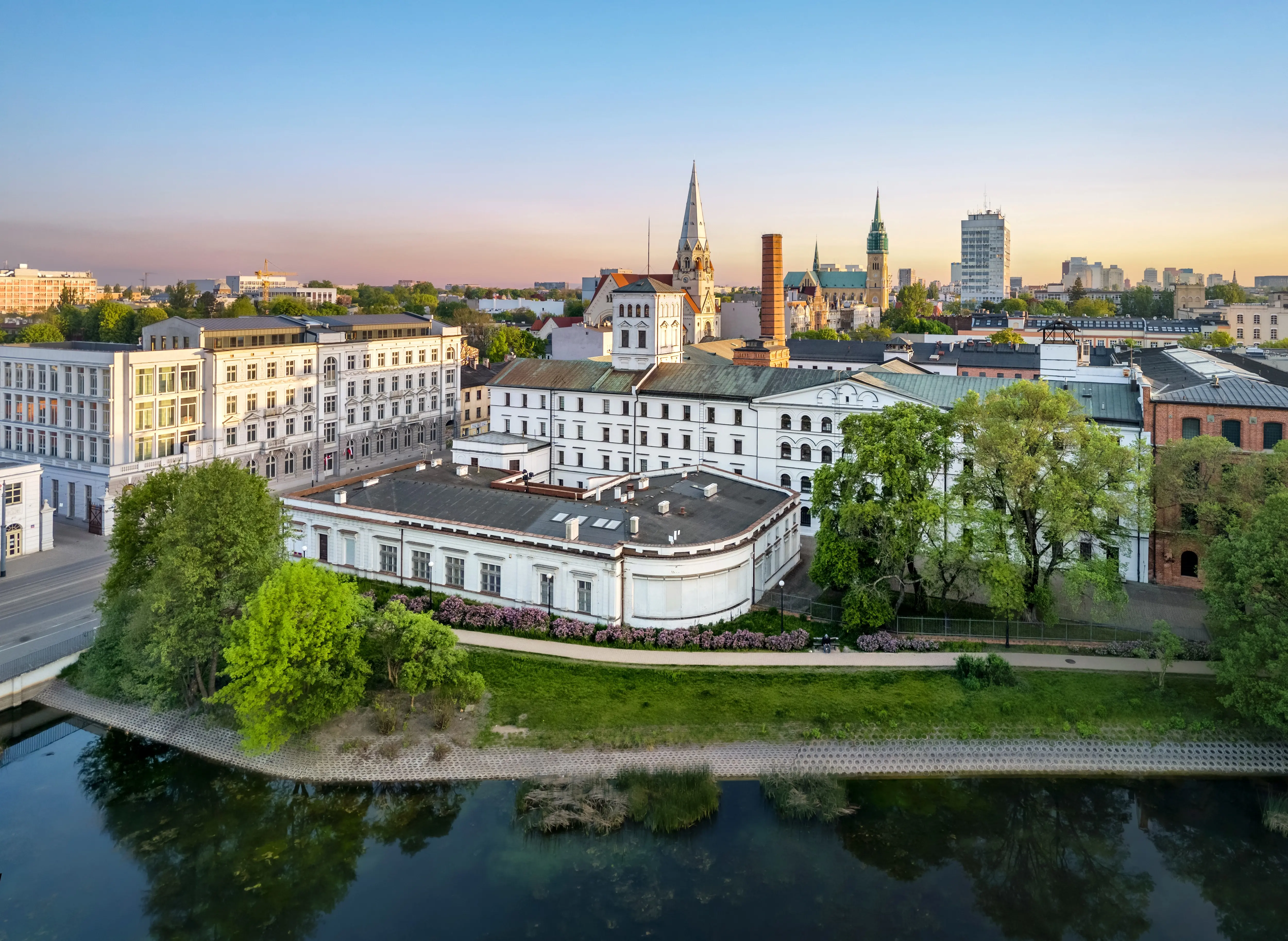
The White Factory
Ludwik Geyer’s White Factory is associated with an early chapter of industrial textile production in Łódź. Its appearance differs from the red-brick complexes elsewhere in the city, making it a useful contrast in an architecture-focused itinerary.
The Central Museum of Textiles gives the building a cultural role that connects industry with textile art and design. This is one of the most direct ways to understand how the city’s manufacturing past can be read through both machinery and creative work. The museum’s different spaces deserve a planned visit rather than a short exterior photograph.
Museums and creative life
Central Museum of Textiles
The Central Museum of Textiles explores the material that helped make Łódź. Industrial processes, clothing, design and textile art can reveal different sides of the same subject. The museum’s setting and related historic buildings create a broader encounter with how people worked and lived.
Choose the route according to interest. A design group may focus on contemporary textile practice, while a first-time visitor may prefer the relationship between production and social history. Temporary exhibitions matter here, so a program should respond to what is actually on display rather than relying on one permanent description.
Muzeum Sztuki and ms²
Muzeum Sztuki is central to Łódź’s identity as a city of modern art. Its history is connected with the avant-garde, and its different locations present collections and exhibitions through distinct settings. ms², in the Manufaktura area, links a former industrial environment with modern and contemporary art.
A visit can introduce artists and ideas that are less familiar to international travelers than the Old Masters seen elsewhere in Poland. The institution’s branches are not all in one building, so choose deliberately. Combine an exhibition with the industrial context outside for a day that moves between art and the conditions that shaped the city.
Film Museum
Łódź’s film identity is rooted in institutions, education and production, not only celebrity associations. The Film Museum provides a way into that story, with the Scheibler palace setting adding another layer of industrial wealth and cultural reuse.
This is a distinctive choice for cinema enthusiasts, families or travelers who enjoy the relationship between technology and storytelling. A film-themed itinerary can connect the museum with other relevant institutions and locations, but access to working educational or production spaces must be arranged rather than presumed. The city should not be presented as an unrestricted studio tour.
EC1 and the cultural reuse of infrastructure
The former EC1 power station is another example of Łódź’s shift from industrial infrastructure to cultural and educational uses. Its scale and engineering character make the architecture part of the visit, not just a container for exhibitions.
Different institutions and attractions within the complex have separate programs and admission arrangements. Select the relevant science, film or cultural experience rather than promising that one ticket covers everything. EC1 pairs naturally with a wider discussion of the city’s redevelopment and the changing area around Łódź Fabryczna.
Radegast Station and Jewish heritage
Radegast Station is a place of remembrance associated with the history of the Litzmannstadt Ghetto and deportations. It belongs in a carefully prepared heritage itinerary, not in promotional language about industrial adventure. The Jewish cemetery and other sites can broaden the account of Jewish Łódź beyond the wartime period alone.
Specialist guiding is valuable when family histories or particular communities are the focus. Memorial access, religious considerations and the emotional pace of the day require attention. A respectful program leaves room for questions and reflection, and does not combine difficult material with unrelated entertainment merely to fill a timetable.
Streets, neighborhoods and smaller discoveries
OFF Piotrkowska and reused factory spaces
OFF Piotrkowska illustrates a smaller-scale form of industrial reuse, where former production spaces support contemporary businesses and creative activity. Its interest is different from that of a restored palace or a formal museum.
Explore it as part of the city’s present rather than proof that every industrial building has found a final, successful new role. Individual venues change, so a current selection matters. It can make a good place to pause during a Piotrkowska walk, particularly for visitors interested in design, food and the everyday use of historic spaces.
Murals and public art
Public art provides another way to navigate Łódź. Large murals and smaller interventions appear across different neighborhoods, creating routes beyond the best-known street. The strongest walk selects works with an explanation of their context rather than treating the city as a collection of oversized photographs.
Works can change or disappear, and a current route is preferable to a permanent list that may become outdated. Public art can be combined with architecture and local stops, but should not obscure the lives of residents or encourage entry into private property for a better view.
Parks and residential Łódź
Green spaces and residential streets help balance the density of the industrial story. A park visit can create room between substantial exhibitions and show a different relationship between the city’s residents and its landscape.
For a longer stay, choose an area near the planned museum route rather than crossing the city just to add another name. The purpose is not to fill every hour, but to create a varied rhythm. Łódź is most revealing when its factories, homes, art and ordinary public spaces are experienced together.
Plan a stay with substance
Make this part of your Poland journey
VisitPoland by Polish Travel Quo Vadis
Tell us which places and experiences interest you, when you would like to travel and the pace you prefer. We will use those ideas to discuss a tailor-made proposal.