Toruń
Toruń brings medieval brick architecture, river trade, astronomy and gingerbread into a compact but rewarding city stay.
Its historic streets preserve a different relationship with the past from the reconstructed centers of Warsaw and Gdańsk. Stay beyond a brief square walk and the city reveals merchants’ houses, museum collections, a scientific legacy and a riverfront that changes character as evening arrives.Suggested stay
Region
Trip style
Explore this page
Have any other questions?
Need more information before planning your visit to Łódź? Get in touch with us to discuss your ideas, ask a question or explore options for your trip.
A trading city with two medieval centers
Toruń developed on the Vistula in the medieval period, with trade connecting the city to wider Baltic networks. Its prosperity can still be read in civic buildings, churches and merchants’ houses. Brick is not simply a visual theme here; it is part of the architectural tradition through which the city expressed commerce, faith and authority.
The UNESCO-listed ensemble includes the Old Town, the New Town and the remains of the Teutonic castle. The two town centers had different origins and functions, so a visit that stays only around the Old Town Hall misses part of the urban story. The ruins introduce a further layer: the relationship between the town and the Teutonic Order was not always harmonious.
Nicolaus Copernicus was born in Toruń in 1473. His life later extended far beyond the city, but the family’s merchant background and the urban world in which he was born create a meaningful local starting point. The scientific story should be connected with the historical city rather than reduced to a statue alone.
Gingerbread adds another thread. Ingredients, trade, craft and changing production methods help explain how a food tradition became part of Toruń’s identity. The strongest visit combines architecture with one museum that deepens a chosen theme, leaving time for the river and smaller streets.
Landmarks in the medieval city
Old Town Hall and Market Square
The Old Town Hall is the civic anchor of Toruń. Its Gothic form and substantial scale express the confidence of a prosperous trading city. Around it, the square remains a place of meeting and movement rather than a static architectural display.
The museum inside adds collections and historical context to the exterior. Any tower visit is a separate physical and operational consideration. Begin with the square, then explore the streets leading away from it to see how civic space connected with homes, churches and trade. The area is especially rewarding when revisited in the evening after day visitors have moved on.
The New Town
Toruń’s New Town is medieval despite its name. Its own market square and surrounding streets reveal an additional urban center, historically distinct from the older settlement. Including it makes the city’s structure much easier to understand.
The walk between the two areas can be one of the most useful parts of a guided introduction. Compare street patterns, civic spaces and religious buildings instead of assuming that the whole historic center developed at once. The New Town also offers a quieter counterpoint to the most photographed streets around the Old Town Hall.
Cathedral of St. John the Baptist and St. John the Evangelist
The Cathedral of St. John the Baptist and St. John the Evangelist introduces the religious and artistic life of the medieval city. Its monumental brick structure and interior works belong to a long history of patronage and worship. Connections with Copernicus add another layer to the visit.
As an active cathedral, it needs to be visited around services and the current access rules. A focused explanation of a few objects and architectural features is more useful than a rapid walk through every corner. Pair it with nearby merchants’ streets to understand religion within the wider social world of the city.
St. James’s Church
St. James’s Church is an important reason to continue into the New Town. Its Gothic architecture and setting create a distinct encounter from the cathedral in the older center. The building helps reveal how different communities and institutions shaped Toruń.
A visit can focus on the exterior and urban setting or include the interior when available. The point is not to collect churches indiscriminately, but to compare their roles and architecture. For travelers particularly interested in medieval art, this area deserves more time than the standard first-hour orientation walk.
Castle ruins, gates and city walls
The Teutonic castle ruins and surviving defenses give physical form to the city’s relationship with power and trade. Gates and walls also explain the connection between the streets above and the river below. The ruins should be presented as ruins, not as a complete medieval castle interior.
A walk through this area works well with the waterfront. It can introduce how Toruń controlled movement and how its relationship with the Order changed. Uneven surfaces and the specific visitor route need considering, but the wider landscape remains valuable even without an extensive interior visit.
The Vistula waterfront
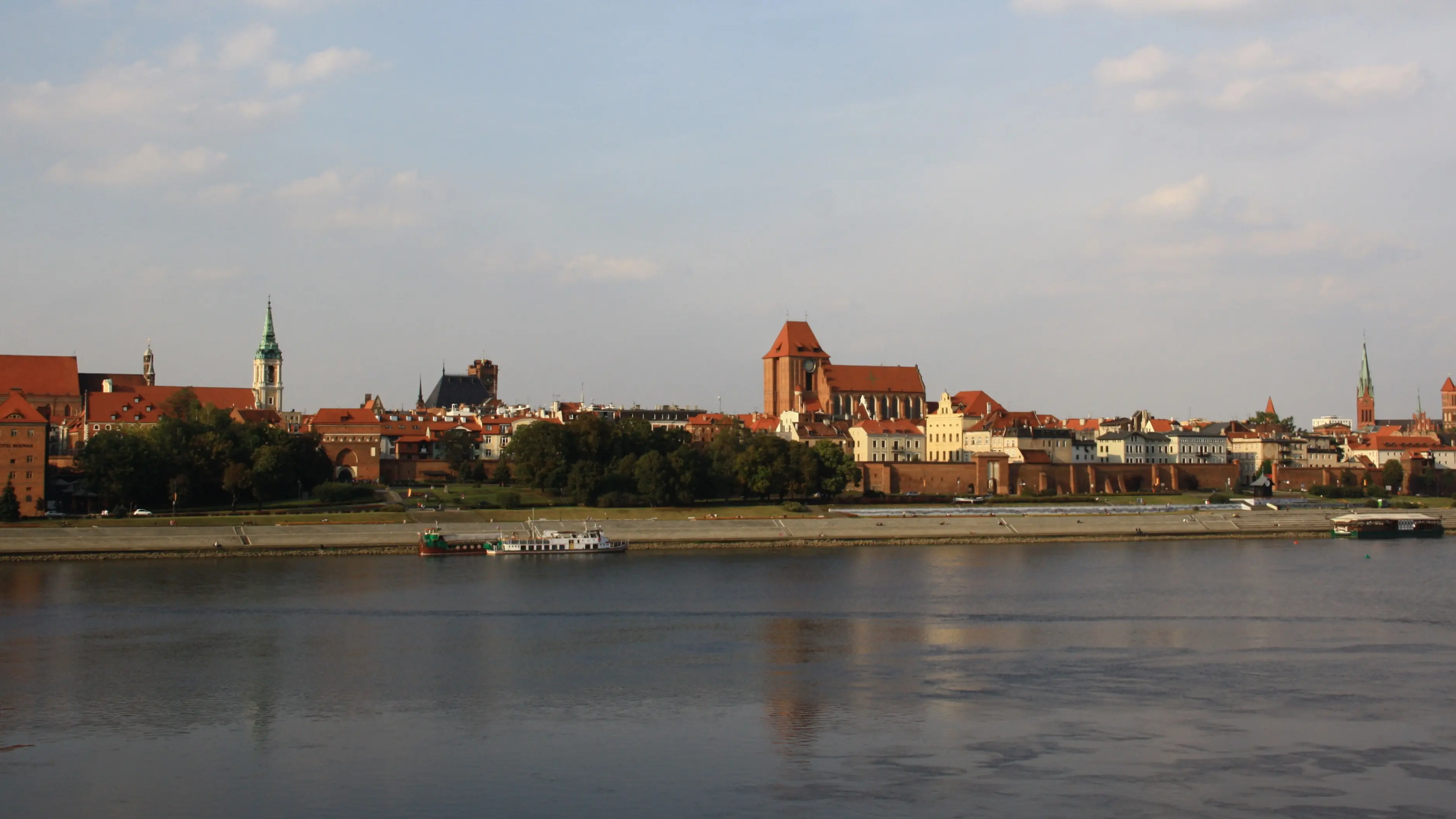
The Vistula is essential to Toruń’s history and its present atmosphere. The riverfront offers a different view of the city’s towers, walls and rooflines, helping connect the architecture with the waterborne trade that supported it.
Leave time for a walk rather than treating the waterfront only as a panorama viewpoint. Light and weather change the experience, and seasonal river services are optional additions. An overnight stay allows visitors to return to the water in the evening, when the compact city feels different from a brief daytime excursion.
Museums and experiences with a clear purpose
Nicolaus Copernicus House
The museum associated with Copernicus introduces the scientist’s life, the world of his family and the merchant-house setting of medieval Toruń. It provides more substance than a simple birthplace label, connecting biography with the intellectual and material world around him.
For science-focused travelers, the visit can be paired with the planetarium. For a broader city itinerary, it complements the streets and houses explored outside. Museum interpretation should be followed carefully where it distinguishes confirmed historical evidence from traditions about particular spaces or buildings.
Museum of Toruń Gingerbread
The Museum of Toruń Gingerbread is part of the District Museum and explores the history of production, trade and the city’s best-known food tradition. It is distinct from other gingerbread attractions in town, including demonstration-focused experiences run by separate operators.
Choose according to the desired emphasis: historical exhibition, participatory workshop or both where available. Language, dietary considerations and group size need arranging in advance. A thoughtful visit connects ingredients and craft with the city’s trading past, making gingerbread more than a souvenir bought before departure.
Museum of Asian Art at the House under the Star
The House under the Star brings together an important historic townhouse and a museum of Asian art. That combination introduces a cultural perspective beyond the expected medieval and astronomical themes of Toruń.
It is a good choice for travelers interested in collecting, decorative arts or the interiors of historic urban houses. The branch has its own visitor arrangements and should be selected deliberately. Paired with the Old Town Hall, it shows how a compact city can support very different museum experiences within a manageable walking area.
The planetarium
The planetarium extends the city’s association with astronomy into a different form of learning. It is not a museum of Copernicus alone, and its program should be chosen according to language, age and subject.
A suitable screening can make a rewarding addition for families or science enthusiasts, but admission and the particular presentation need confirming. It is most useful when connected with the historical story rather than added simply to fill an hour. The combination of the city, the Copernicus museum and a carefully selected program can create a full thematic day.
A compact city worth an overnight stay
Make this part of your Poland journey
VisitPoland by Polish Travel Quo Vadis
Tell us which places and experiences interest you, when you would like to travel and the pace you prefer. We will use those ideas to discuss a tailor-made proposal.