Wrocław
Wrocław is a city of islands, bridges and architectural contrasts. A Gothic town hall, a Baroque university interior and an early reinforced-concrete landmark belong to different chapters of the same place. The Oder ties them together, while neighborhoods, museums and a lively cultural program make the city more than a picturesque square. It is also the natural starting point for a longer journey through the castles, towns and landscapes of Lower Silesia.Suggested stay
Region
Trip style
Explore this page
Have any other questions?
Need more information before planning your visit to Warsaw? Get in touch with us to discuss your ideas, ask a question or explore options for your trip.
The many histories behind one city
Wrocław’s history crosses several political and cultural worlds. The city has been shaped by the medieval Piast realm, Bohemian and Habsburg rule, Prussia and Germany, and postwar Poland. Those transitions help explain why its architecture cannot be assigned to one period or tradition. Religious buildings, civic institutions and street patterns preserve different layers of an interconnected Central European past.
The Second World War brought profound destruction. After 1945, border changes and population movements transformed the city’s social identity as well as its built environment. Polish residents, including people displaced from former eastern territories, made new lives among buildings whose earlier inhabitants had largely gone. A thoughtful account recognizes both cultural continuity and rupture, without presenting the present city as unchanged across centuries.
Reconstruction, adaptation and contemporary development have continued to shape Wrocław. The historic center, university quarter, Centennial Hall area and former industrial spaces show different approaches to the city’s past. The small dwarf sculptures encountered around town add a playful contemporary layer; they are not the medieval reason the city exists. Their story is connected with the Orange Alternative opposition movement and later public art.
A first visit works best when the square is only the beginning. Follow the river, choose an art or history museum, and make time for a district beyond the principal landmarks. Wrocław becomes much more interesting when its visual charm is connected with the people and political changes behind it.

Architecture and places to understand

Market Square and the Old Town Hall
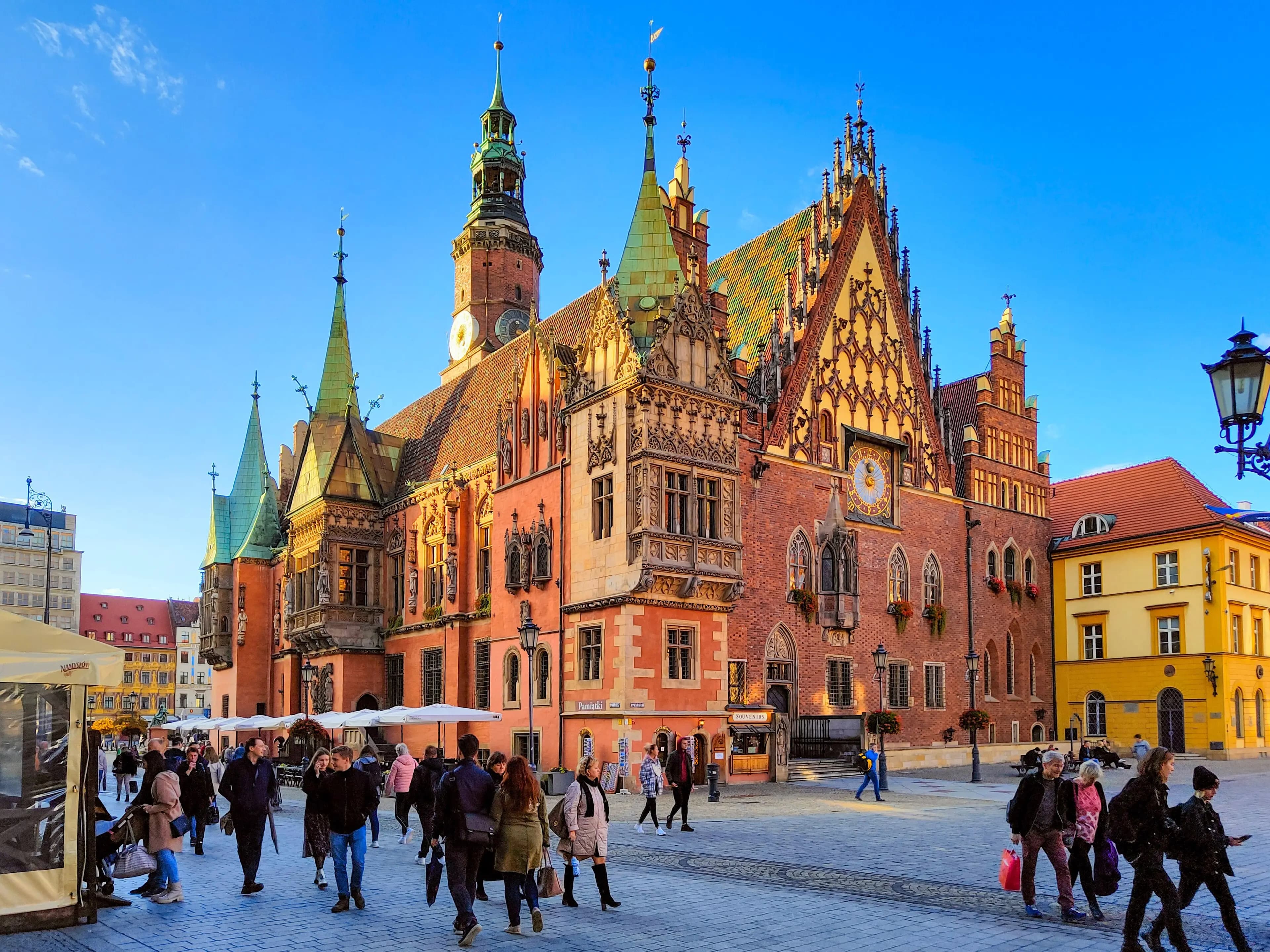
The Rynek is a richly layered civic space rather than a uniform architectural ensemble. Colorful townhouses frame the square, while the Old Town Hall’s late-Gothic features recall the city’s commercial and political importance. Look closely at rooflines, carved details and the different scales of surrounding streets.
The nearby Salt Square extends the experience, but smaller lanes often reveal more than another circuit of the main facades. An introductory walk can distinguish restored buildings from surviving details and later additions. Return after dark to see the square as a social space, not simply a place to complete in the first hour of arrival.
Ostrów Tumski and the cathedral
Ostrów Tumski is one of the oldest parts of Wrocław, associated with the city’s ecclesiastical beginnings. The cathedral and surrounding churches create a different atmosphere from the commercial center. The relationship between buildings, water and bridges is particularly important to the experience.
Visit as a connected area rather than only a cathedral interior. The approach across the river, smaller streets and evening lighting all contribute to its character. Churches remain active places of worship, and towers or special spaces may have separate access. This is a natural pairing with the university quarter or a riverside walk, allowing the old city to unfold at a slower pace.
The university and Aula Leopoldina
The University of Wrocław’s historic complex introduces the city’s Baroque and intellectual traditions. Aula Leopoldina, the ceremonial hall, is a concentrated example of architecture, painting and sculpture working together to represent learning and authority.
The university buildings reward a focused visit rather than a quick detour for a decorative ceiling. A guide can connect the interior with the Habsburg period and the wider story of the institution. Available rooms and museum routes need checking for the intended date. Combine the university with the riverfront to balance richly decorated interiors with a more open view of the city.
Centennial Hall
Designed by Max Berg and built in the early twentieth century, Centennial Hall is a major landmark in the history of reinforced-concrete construction. Its UNESCO status recognizes an architectural and engineering achievement that is very different from the Gothic and Baroque city center.
The hall should be experienced with its wider setting, including the exhibition grounds and nearby cultural spaces. It remains a working venue, so interior access depends on the calendar. Even an exterior architectural visit can explain its structural ambition and influence. This is a strong choice for design, engineering and architecture interests, not only for travelers already familiar with modernism.
Szczytnicki Park and the Japanese Garden
The landscape around Centennial Hall provides a green counterpoint to the building’s monumental form. Szczytnicki Park and the Japanese Garden offer different ways to explore designed outdoor space, with paths, planting and water contributing to the experience.
The garden is a specific attraction with its own seasonal access, rather than a generic name for the whole park. Combine it with the hall and the Four Domes Pavilion for a day centered on architecture, art and landscape. The area can also provide a less intensive afternoon after several indoor visits, particularly in milder weather.
The Four Denominations District
The area often called the Four Denominations District brings Catholic, Orthodox, Protestant and Jewish religious sites into close geographical proximity. The name is a useful introduction to religious diversity, but it should not be treated as a claim that the city’s communities always lived without tension.
The White Stork Synagogue and nearby streets can anchor a thoughtful walk through this layered history. Access to religious interiors and cultural programs varies. The neighborhood also has contemporary social life, so its significance is not confined to a historic label. It works well with a central-city stay without requiring a separate full-day excursion.
Museums, art and the city’s identity
National Museum in Wrocław
The National Museum offers an important perspective on Silesian and Polish art. Its collections help explain the region’s religious, political and cultural connections, adding substance to the architectural diversity visible outside. Sculpture and painting can make a useful bridge between the medieval city and later artistic traditions.
Choose a collection-led route instead of trying to see every gallery. The museum is especially valuable for travelers who want to understand Lower Silesia before continuing into the region. It can be paired with Ostrów Tumski and the river, keeping the day geographically coherent rather than crossing the city repeatedly.
Panorama of the Battle of Racławice
The Racławice Panorama presents a nineteenth-century form of immersive historical painting. The large circular work depicts the battle of 1794 and is closely connected with Polish national memory. Its own journey from Lwów to postwar Wrocław is also part of the story.
The visit is more meaningful when introduced as an artwork and a cultural object, not simply an impressive visual effect. Timed entry shapes the day, and groups should arrange admission before fixing neighboring visits. It is an accessible starting point for discussing how art represents history, particularly alongside the National Museum’s broader collections.
Four Domes Pavilion
The Four Domes Pavilion presents Polish contemporary art within the historic exhibition landscape around Centennial Hall. That combination makes the building and its contents mutually revealing: early twentieth-century architecture becomes the setting for later artistic questions.
It is a distinct museum visit, not an automatic extension of the hall’s admission. The current displays determine the best focus. Pair it with the Japanese Garden or the wider park if the group prefers a mixture of indoor and outdoor experiences. For repeat visitors, this area can provide a full cultural day away from the Old Town.
Zajezdnia History Centre
The Zajezdnia History Centre explores the social history of Wrocław and its people, especially the transformations after the Second World War. It helps explain how residents created a new civic identity amid changed borders, migration and the inherited urban landscape.
This is a useful complement to architecture-based sightseeing because it puts people back into the story. It lies outside the most compact tourist circuit and benefits from a deliberate place in the program. Travelers interested in modern Poland, family histories or the experience of rebuilding communities may find it more illuminating than another monumental interior.
Hydropolis
Hydropolis approaches water through science, technology and its relationship with human life. Its setting in historic water infrastructure makes it a fitting attraction in a city defined by a river and its branches. The experience is different from an art or history museum and can broaden a family itinerary.
Plan it around the interests of the group rather than assuming interactive exhibitions are only for children. It can be paired with an outdoor river walk, but not every city-center landmark is immediately adjacent. Current admission arrangements and the time needed for the exhibition should be considered before adding more stops.
Walk beyond the main square
The Oder islands and riverside
The river is Wrocław’s organizing landscape. Islands and bridges create changing views and routes between neighborhoods, religious sites and public spaces. A walk along the water can connect major sights without making the day feel like an endless sequence of interiors.
River cruises are an optional, seasonal way to see the city, not a necessary condition for enjoying it. Weather and water conditions affect services. For an uncomplicated introduction, choose a manageable stretch near the center and leave time to stop, look across the water and understand how the city developed around it.
Nadodrze
Nadodrze reveals a more everyday Wrocław, with historic residential buildings, workshops and creative activity beyond the principal squares. Its interest lies in the relationship between existing communities and changing uses, rather than in a claim that it is an untouched or secret district.
A neighborhood walk can focus on craft, architecture or contemporary urban life. Shops and studios are working businesses, so special visits should be arranged rather than assumed. This area suits a longer stay or travelers who enjoy discovering a city through smaller-scale places between the major attractions.
The city of dwarfs
The dwarf sculptures create an engaging thread through Wrocław, especially for a family walk. Their contemporary popularity sits alongside the political history of the Orange Alternative, whose humor challenged communist authority. Not every later figure carries the same historical meaning.
Use a few sculptures as a playful route between places you already want to visit, rather than turning the whole day into a competition to find as many as possible. Their locations and number can change. The best family program combines the search with stories, breaks and one museum suited to the children’s interests.