Poznań
Poznań connects the beginnings of the Polish state with a city that remains energetic, practical and outward-looking. Cathedral Island tells one story; the Renaissance town hall, university life, design and the legacy of the Enigma codebreakers tell others. Add the green spaces around Lake Malta and an interest in regional food, and Poznań becomes a rewarding stay in its own right, not simply a stop between larger names.Suggested stay
Region
Trip style
Explore this page
Have any other questions?
Need more information before planning your visit to Warsaw? Get in touch with us to discuss your ideas, ask a question or explore options for your trip.
Where early Poland meets a modern city
The early Piast rulers established important centers in Greater Poland, and Poznań’s Ostrów Tumski belongs to that formative landscape. Archaeology and the cathedral precinct reveal political and religious developments associated with the emergence of the Polish state. It is more accurate to present Poznań as one of its key centers than to reduce a complex historical process to one definitive “birthplace.”
The later medieval city developed on the other side of the river, with the market square at its commercial and civic center. Renaissance rebuilding gave the town hall the form most recognizable today. The contrast between Cathedral Island and the Old Market Square therefore represents different stages in urban development, not two versions of the same attraction.
The partitions of Poland and Prussian rule reshaped Poznań’s institutions and architecture. The Imperial District expresses that later political vision. The Greater Poland Uprising of 1918–1919 and the city’s subsequent development add further layers, while the mathematicians associated with breaking Enigma connect local scholarship with an international story.
Poznań rewards a route that connects these periods. Begin with the early-state landscape, move into the mercantile city and finish with modern culture or twentieth-century history. The result is more distinctive than a brief square walk followed by departure.
Museums, scholarship and cultural choices
Old Market Square and the Town Hall
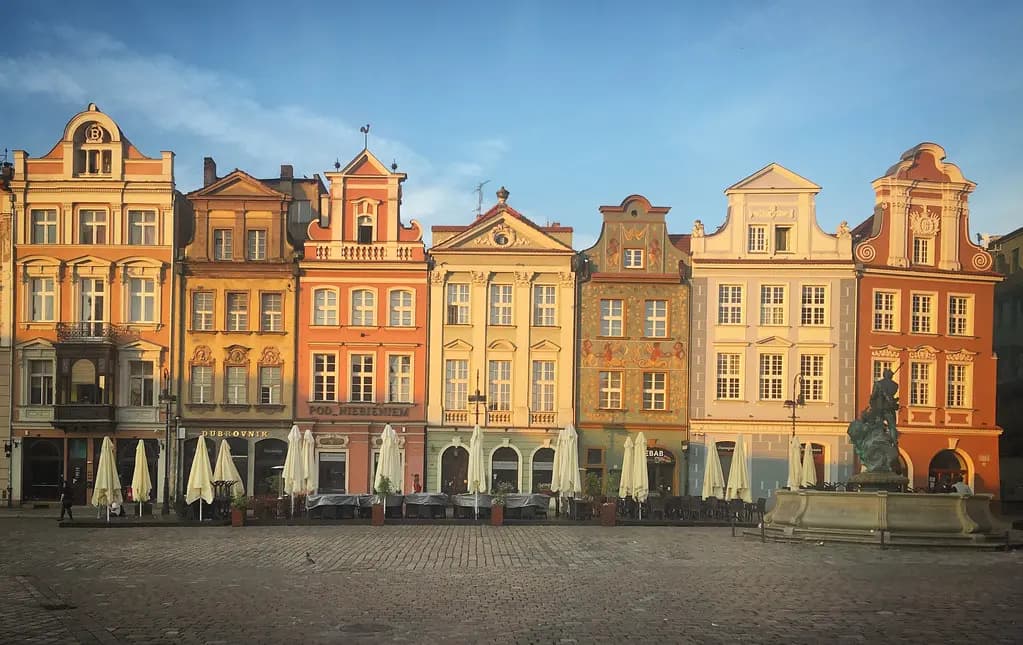
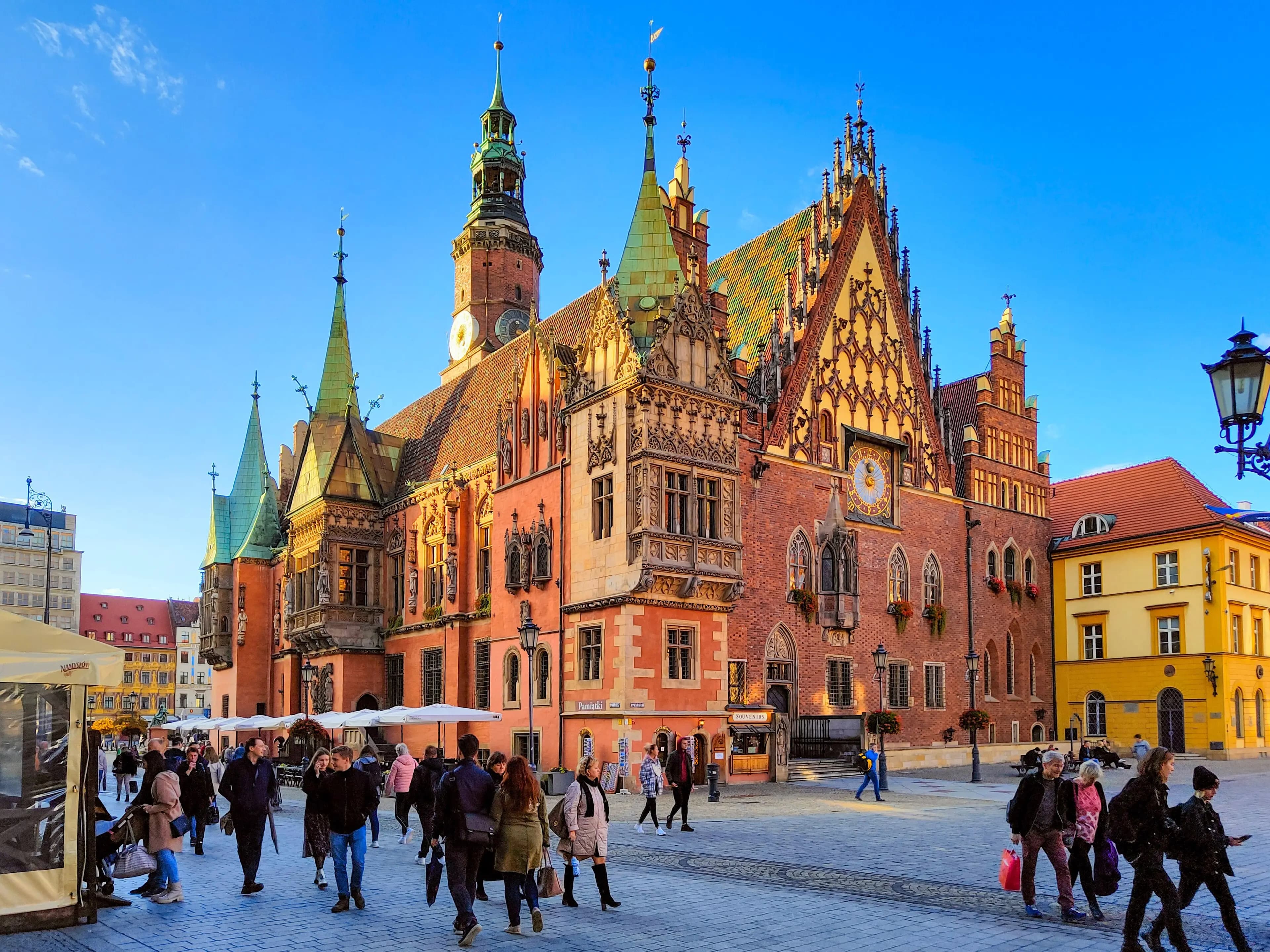
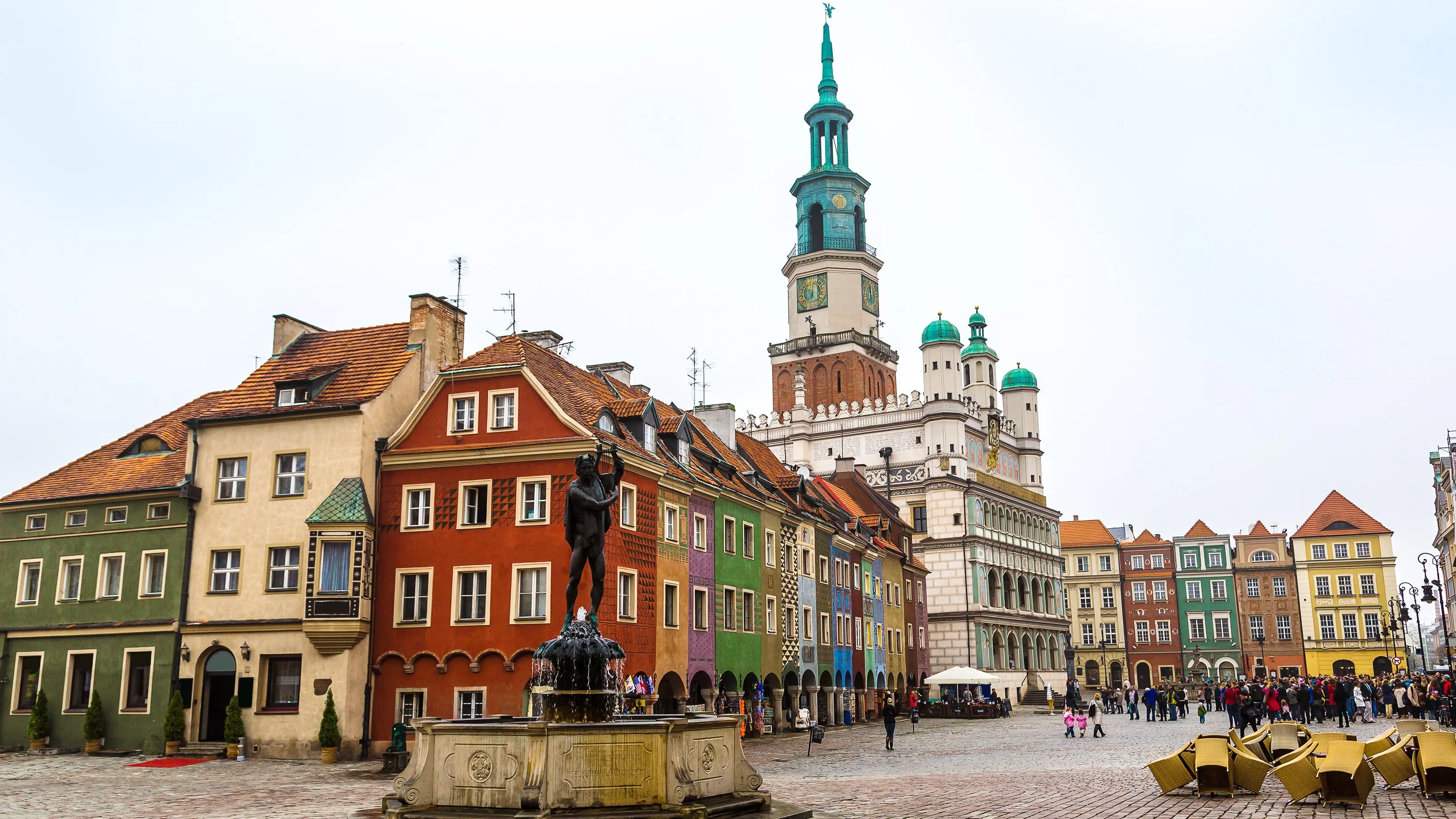
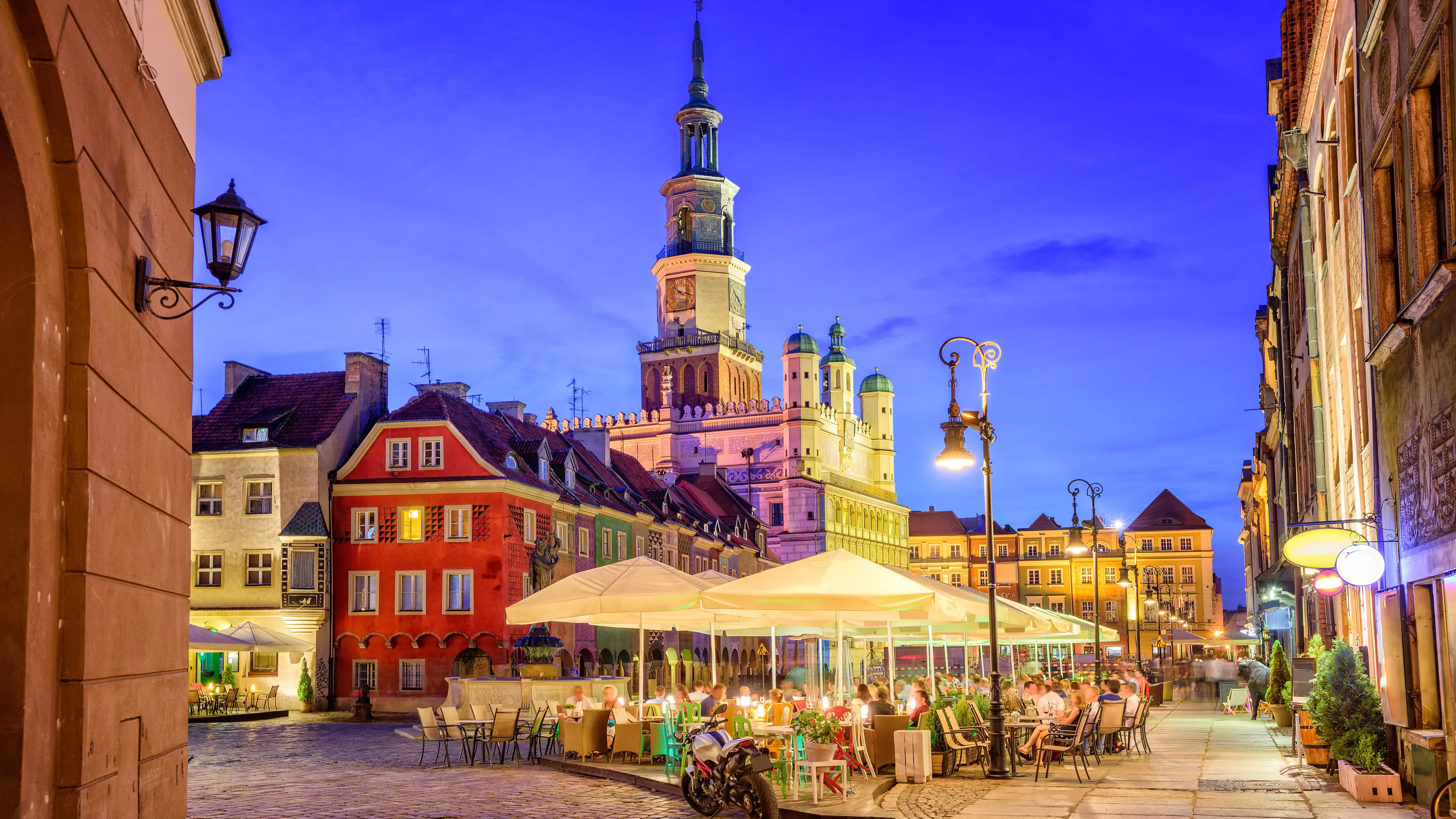
The Old Market Square combines civic architecture, merchants’ houses and the colorful scale of the historic center. The Renaissance town hall, associated with the work of Giovanni Battista di Quadro, is the visual focus. Its design expresses an ambitious city government as much as decorative elegance.
The famous mechanical goats belong to Poznań’s traditions, but their current display arrangements should be checked rather than used as the only reason to visit. Look beyond the spectacle to the building, surrounding streets and different architectural layers. A walk through the square pairs naturally with a museum or a regional food experience.
Cathedral Island
Ostrów Tumski offers a quieter and more historically concentrated setting than the market area. The cathedral and archaeological landscape introduce the Piast period and the role of Christianity in the early Polish state. The island’s significance lies partly in what survives below or within later buildings.
A guided visit can distinguish historical evidence from traditions and interpretations. Religious services shape access to the cathedral, and individual underground or museum areas may follow separate arrangements. Combine the island with Porta Posnania rather than expecting a short look at the church facade to explain this foundational chapter of Poland’s history.
Porta Posnania
Porta Posnania is an interpretation center devoted to Cathedral Island and its historical significance. The contemporary building and the route toward the older landscape create a deliberate encounter between modern interpretation and a place with deep historical layers.
It is particularly useful before exploring the island, because it helps visitors understand what they are looking at. The experience is not a conventional collection of old objects alone. Families, history enthusiasts and first-time visitors can use it as a framework for the rest of the day. Plan the exhibition and outdoor portion together rather than treating them as unrelated stops.
The Imperial Castle and district
The Imperial Castle was built for the German emperor in the early twentieth century. Its scale and architectural language belong to the period of Prussian and German rule, while later adaptations reveal changing political purposes. Today, cultural uses give the building another chapter.
A visit should acknowledge those layers rather than presenting the castle as a medieval royal residence. The surrounding district provides important context through public buildings, university connections and urban planning. Current exhibitions and access determine the interior experience. An architectural walk can remain meaningful even when specific rooms are unavailable.
The parish church and former Jesuit complex
Poznań’s parish church, commonly called the Fara, introduces the city’s rich Baroque religious architecture. Its interior offers a different visual experience from the Renaissance town hall or the cathedral precinct. The surrounding former Jesuit complex links religious life with education and the history of the city center.
This is an active church, so worship and visitor access must be respected. A quiet interior visit can be combined with nearby streets and a slower walk away from the main square. Music may add another dimension when a suitable program is confirmed, but a performance should never be assumed merely because an organ is present.
Museums, scholarship and cultural choices
Enigma Cipher Centre
The Enigma Cipher Centre introduces the mathematical work associated with Marian Rejewski, Jerzy Różycki and Henryk Zygalski. Their contribution to breaking Enigma belongs within a wider international history of cryptology and wartime cooperation, not a simplified claim that one institution alone solved every stage of the problem.
The center is a distinctive choice for visitors interested in science, mathematics, history or problem-solving. Its connection with Poznań gives the city a compelling story beyond architecture. Pair it with the university and Imperial District for a coherent day rather than adding it as a disconnected technical attraction.
National Museum in Poznań
The National Museum introduces art collections that reward a slower visit to the city. Polish and European painting provide alaternatives to the historical narrative of the early state and the architectural landmarks outside.
A collection-led visit works especially well for travelers who want to connect regional history with a broader cultural perspective. Choose the relevant branch and current exhibition program rather than assuming every collection is in one building. For a short stay, one thoughtfully selected gallery can be more valuable than several interiors visited without a theme.
Archaeological Museum
The Archaeological Museum offers a way to investigate the past through material evidence. Its collections and exhibitions provide another perspective on the long history of the region and on archaeology as a discipline, complementing the interpretation of Cathedral Island.
This is a useful choice for travelers whose interests go beyond royal biographies. The museum can help explain how historical knowledge is assembled from objects and sites. The location in the historic center also makes it possible to combine with an Old Town day without another long transfer.
Poznań Croissant Museum
The Poznań Croissant Museum uses demonstration and storytelling to introduce the city’s St. Martin’s croissant tradition. It is an experience-based attraction rather than a conventional art museum, and a good way to connect food with regional identity.
Participation, language and timing need arranging for the intended visit. Dietary requirements should be discussed in advance; a traditional recipe is not automatically suitable for every allergy or preference. The broader point is not simply tasting something sweet, but understanding why one product has become such a recognizable part of Poznań’s cultural life.
The Royal Castle and applied arts
The reconstructed Royal Castle setting offers another view across Poznań’s history, while the Museum of Applied Arts shifts attention toward objects made for daily, ceremonial and decorative use. Furniture, craft and design can reveal social life in ways that monumental architecture alone cannot.
It is important to distinguish the modern reconstruction of the castle from the historical origins of the site. A visit can combine this discussion with the collections, making it more than a viewpoint stop. Check the current visitor route and branch information when selecting the day’s museums.
Neighborhoods and room to slow down
Śródka
Śródka makes a natural continuation of Cathedral Island, with a smaller urban scale and places to stop between historical visits. Its streets help place the island within a wider lived-in setting rather than isolating the cathedral as a monument.
Choose a walk that allows time to notice buildings, local businesses and the transition between old and new infrastructure. The district is not an outdoor exhibit, so residential spaces deserve ordinary respect. A meal here can provide a relaxed midpoint in a day focused on the city’s earliest history.
Jeżyce
Jeżyce offers a different experience of Poznań through residential architecture, local commerce and contemporary food culture. It suits travelers who enjoy observing the everyday life of a city as well as its formal monuments.
An unhurried neighborhood afternoon can connect smaller shops, cafés and architectural details. Specific businesses and opening arrangements change, so the best program is based on a current selection rather than a permanent list of supposedly fashionable addresses. For repeat visitors, Jeżyce adds a valuable counterweight to the Old Town.
Lake Malta and green Poznań
The area around Lake Malta provides space for walking and recreation beyond the dense historic center. It can be a useful part of a family stay or a slower afternoon between cultural visits. The lake and its surrounding facilities are different experiences, with their own operating arrangements.
Keep the day proportionate to the group’s interests. A lakeside walk does not require booking every nearby attraction, and activity options should be chosen with age, mobility and weather in mind. The city’s green spaces make Poznań feel less compressed, particularly on a longer visit.
A stay with a clear shape
YOUR POZNAN VISIT
See Poznan your way