Fryderyk Chopin MuseumLife and music
Explore Chopin’s life, music and connection with Warsaw through original manuscripts, personal objects and an immersive multimedia exhibition.
Suggested visit
Location
Visit focus
Visitor update: October 25, 2026
The Fryderyk Chopin Museum in Warsaw is closed for renovation until the end of 2026. Check the museum’s official visitor information for confirmed reopening arrangements before planning an interior visit. You can still explore Chopin’s Warsaw through the Royal Route, Holy Cross Church, Royal Łazienki Park and separately arranged performances.
Fryderyk Chopin Museum
The museum and its setting
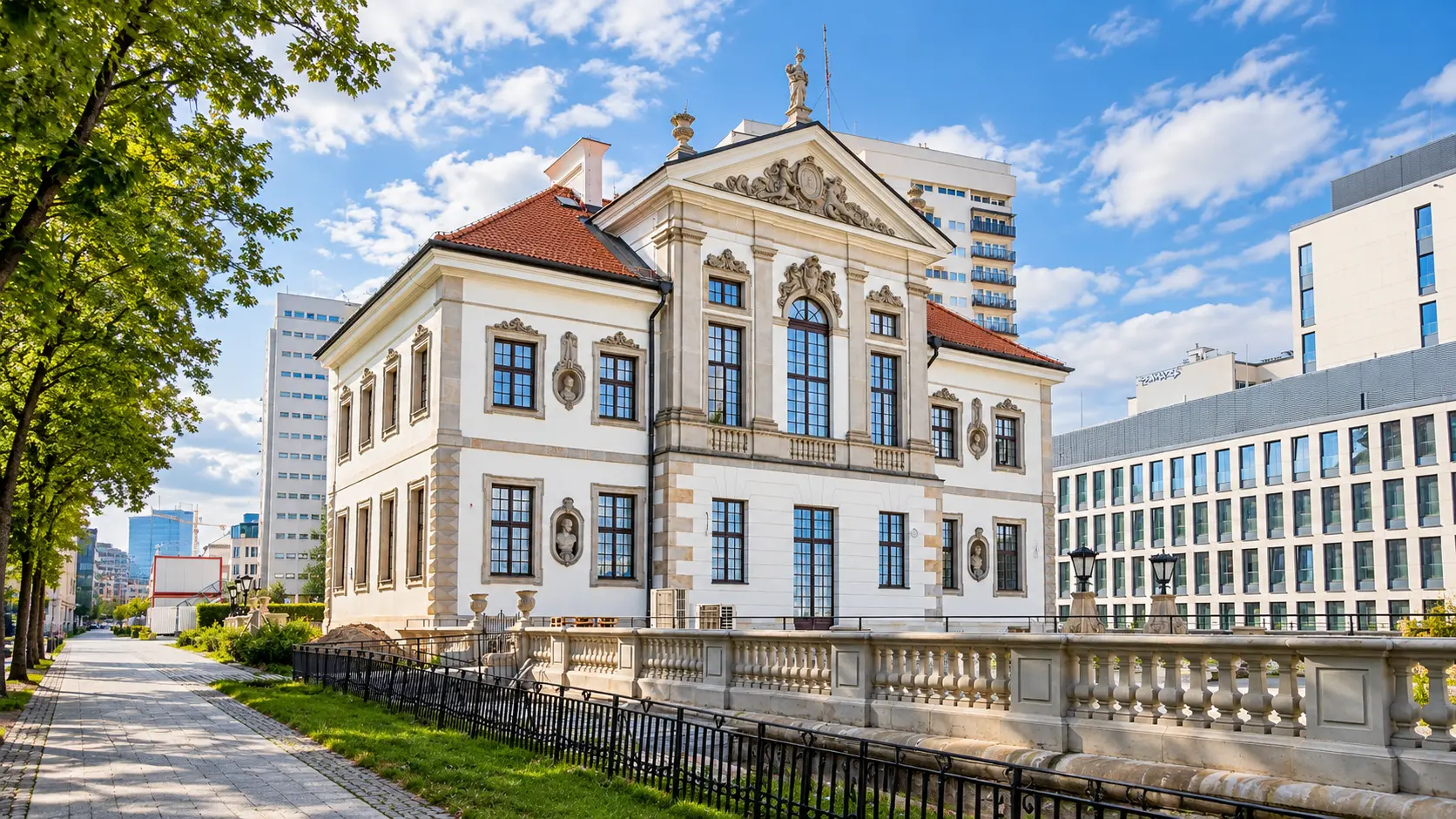
Ostrogski Palace is the museum’s historic home, not Chopin’s birthplace or a house in which he spent his childhood. Making that distinction prevents the architecture from telling a biography it does not actually represent.
Chopin was born in Żelazowa Wola and grew up in Warsaw before continuing his life abroad. The museum’s role is to bring the evidence of that life together and help visitors connect it with the music.
The palace setting belongs naturally with a visit to the Royal Route and Powiśle, but the story of the building and the story of the composer should be treated as related subjects, not the same one.
Manuscripts, letters and the process of making music
The museum’s collections include manuscripts and personal material associated with the composer. Such objects offer more than a connection to a celebrated individual. They can help a listener consider the work involved in composing, communicating and developing a musical life.
A page of notation is interesting not only because it is old. Look for what it suggests about decisions, revisions and the relationship between an idea and its performance. A letter asks different questions about the writer, the recipient and the circumstances of communication.
The selection shown to visitors can change, particularly after modernization. Do not build a specialist program around a specific manuscript without confirming its availability.
An instrument as historical evidence
Among the instruments associated with the museum is Chopin’s last Pleyel piano, made in 1848. The Chopin Institute has documented conservation work on it, emphasizing the instrument as a historic object that requires care.
That is a useful distinction for visitors. A museum piano is not simply equipment waiting to be played on request. It can reveal the material world of music while remaining subject to conservation and display decisions.
For travelers interested in historical performance, separate the wish to see an instrument from the wish to hear a concert. Those experiences may involve different venues, instruments and arrangements.
Give the music some time
An introduction to Chopin should leave room for listening, not only biographical facts. We recommend choosing a few pieces or musical forms as a thread rather than trying to turn one visit into a complete account of the composer’s output.
The comparison can continue outside the museum. Holy Cross Church is a place of remembrance, the Royal Route connects with the composer’s Warsaw world, and the monument in Royal Łazienki Park belongs to the city’s later public tribute.
A recital can add a different dimension when a suitable performance is available. It should be booked as a separate experience, not implied by museum admission.
Connect the collection with the city
Begin with our Royal Route and Holy Cross Church guide when planning a walk through Chopin-related Warsaw. Choose Royal Łazienki Park for a landscape setting and the monument, checking any seasonal concert program separately.
Żelazowa Wola is outside Warsaw and requires its own travel plan. It is not another stop on the same central walking circuit. During a museum closure, a musical city visit can still be built around outdoor locations, appropriate church access and a confirmed performance, without presenting unavailable interiors as part of the itinerary.
YOUR WARSAW VISIT
See Warsaw your way
From an Old Town walk to a longer stay in the capital, tell us what you would like to experience. Share your dates, group size and interests, and we will help shape a visit around you.
Warsaw Old Town and Castle Square
The Royal Route and Holy Cross Church