St. John’s Archcathedraland the New Town
From a historic cathedral to the streets beyond the walls.
Begin at St. John’s in Warsaw Old Town, then explore Freta Street, the New Town and Maria Skłodowska-Curie’s birthplace.Suggested walk
Location
Visit focus
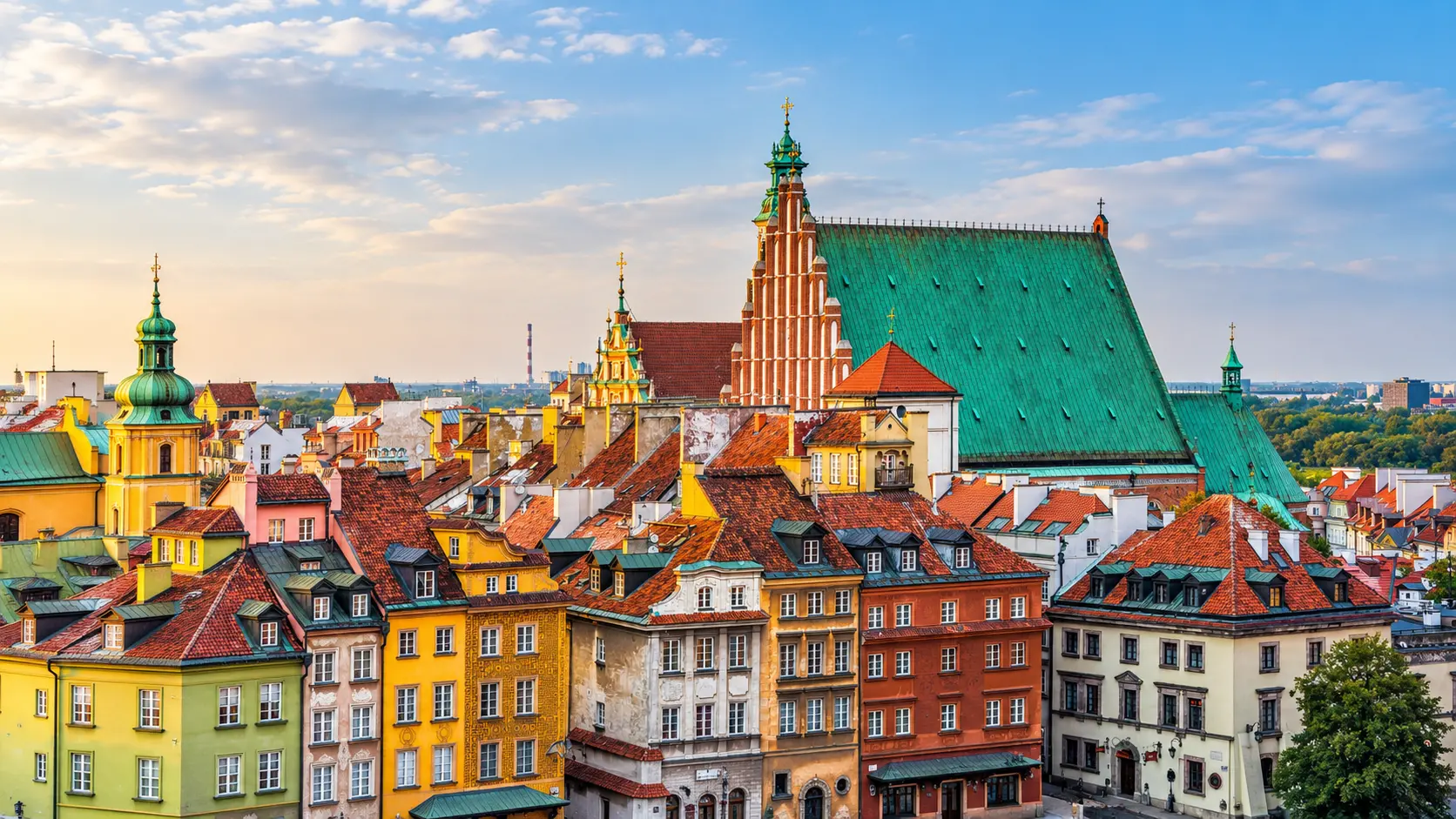
St. John’s Archcathedral and the New Town
This walk connects two neighboring but distinct parts of historic Warsaw. St. John’s Archcathedral stands in the Old Town. The New Town begins beyond the former walls, reached by continuing toward the Barbican and Freta Street. Keeping that geography clear helps explain why the area has more than one historic center. The route moves from national ceremony and religious memory to the streets of a settlement with its own civic history. It is a useful next step after the familiar views of Castle Square and the Old Town Market Square.
St. John’s: a church with a public history
St. John’s Archcathedral is closely connected with events in Polish public life. The coronation of Stanisław August Poniatowski took place here in 1764, linking the church with the final chapter of the Polish monarchy.
The memorials and burial places associated with the cathedral bring together figures from politics, literature and music. Among the names connected with it are Henryk Sienkiewicz and Ignacy Jan Paderewski. The interest is not simply in recognizing famous people, but in understanding why a cathedral became a place where the nation remembered them.
It remains an active place of worship. Enter quietly, respect services and approach any interior visit as time spent in a living religious setting, not as access to an unoccupied historic exhibit.
A rebuilt church, not an unchanged facade
The cathedral suffered severe wartime destruction. Its postwar facade was inspired by Mazovian Gothic rather than being a straightforward copy of the appearance it had immediately before the war.
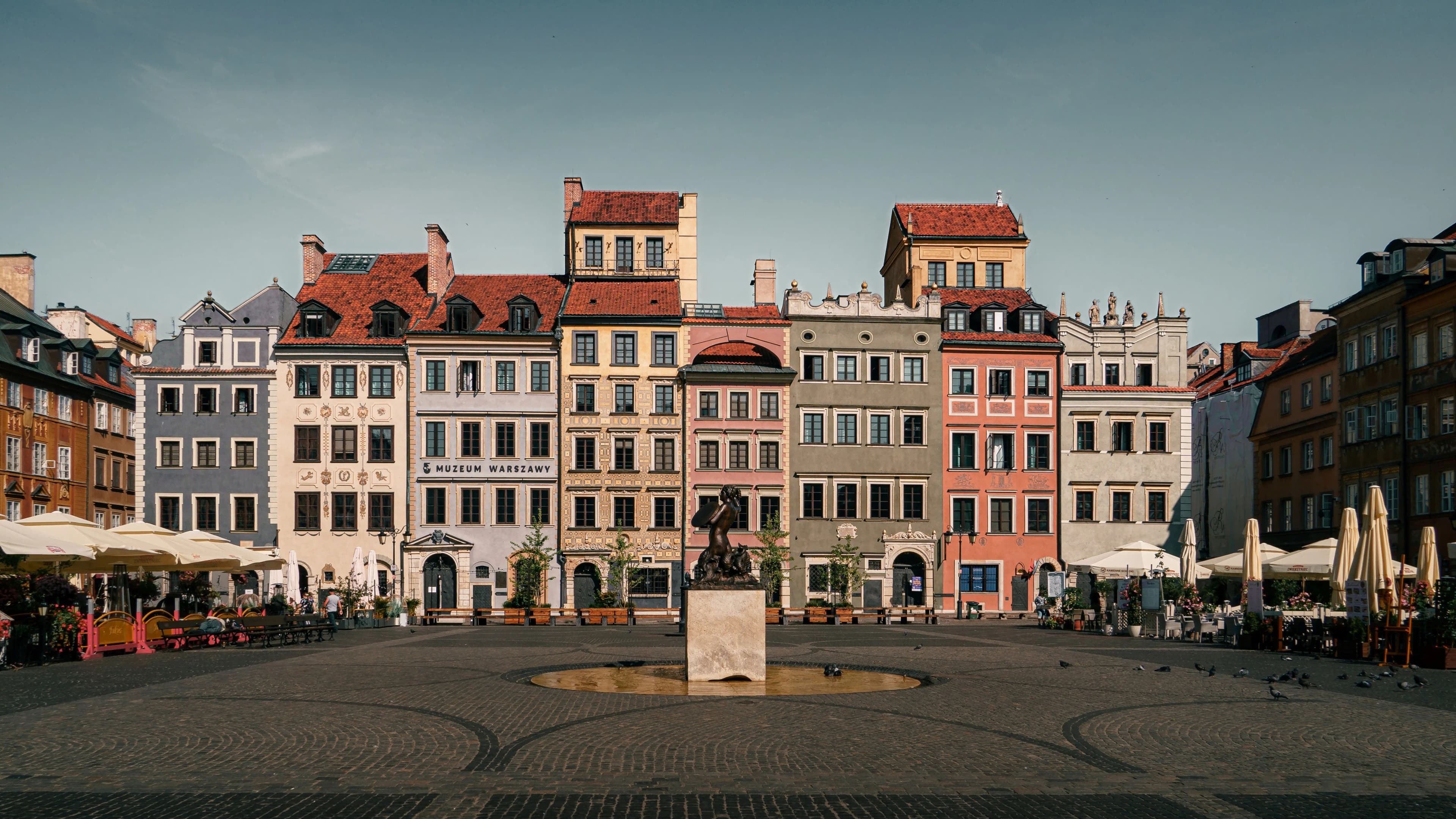
That choice is worth noticing after seeing the rebuilt townhouses outside. Reconstruction involved decisions about which period to emphasize and what image of the past to recover. Compare the cathedral’s brick front with the scale of the surrounding street, then take a moment at Kanonia before continuing north. The larger story of the Old Town’s reconstruction is covered in our Old Town and Castle Square guide.
Crossing into the New Town
Beyond the Barbican, the name Nowe Miasto can be misleading: this is not a modern district. The New Town developed around the turn of the fourteenth and fifteenth centuries as a separate settlement outside the older town’s boundary.
Follow Freta Street toward New Town Market Square, where the white facade and dome of St. Casimir’s Church give the open space a distinctive focus. The neighboring convent belongs to the Benedictine Sisters of Perpetual Adoration. Together, the square, church and surrounding houses reveal another center of religious and everyday life beyond the older town’s walls.
The area also experienced wartime destruction and rebuilding. It should not be presented as an untouched alternative to the reconstructed Old Town. Its value lies in its own street pattern, stories and connection with the expanding city.
Maria Skłodowska-Curie’s Warsaw beginning
At 16 Freta Street, the Maria Skłodowska-Curie Museum occupies the building where the scientist was born. Its focus on her biography and family gives the walk a different subject from churches and royalty.
For visitors who know her mainly through scientific achievements, the Warsaw setting restores a personal beginning: a home, a family and an early environment before her later career abroad. Choose this as a separate interior visit when the history of science is a particular interest, rather than assuming that passing the address tells the whole story.
Check the museum’s current visitor information for admission and exhibition arrangements. This is a biographical museum; it is a different kind of encounter with science from the interactive Copernicus Science Centre.
Continue the walk without retracing every step
We suggest treating the cathedral and New Town as one focused extension, with additional time for any museum interior. There is no need to repeat the full Old Town circuit before beginning. Meet near St. John’s, or start at the Barbican when the New Town is the priority.
For a wider northern Warsaw itinerary, the Citadel and Polish History Museum provide another historical setting, reached as a separate part of the day. To remain within the older streets, return through the Old Town and choose the Museum of Warsaw for a closer look at the lives behind the buildings.
YOUR WARSAW VISIT
See Warsaw your way
From an Old Town walk to a longer stay in the capital, tell us what you would like to experience. Share your dates, group size and interests, and we will help shape a visit around you.
The Royal Route and Holy Cross Church
Royal Łazienki Park