Palace of Culture and Science
A landmark with more than one meaning.
Understand Warsaw’s Palace of Culture and Science through its postwar history, architecture, cultural uses and viewing terrace.Suggested Visit
Location
Visit focus
Palace of Culture and Science
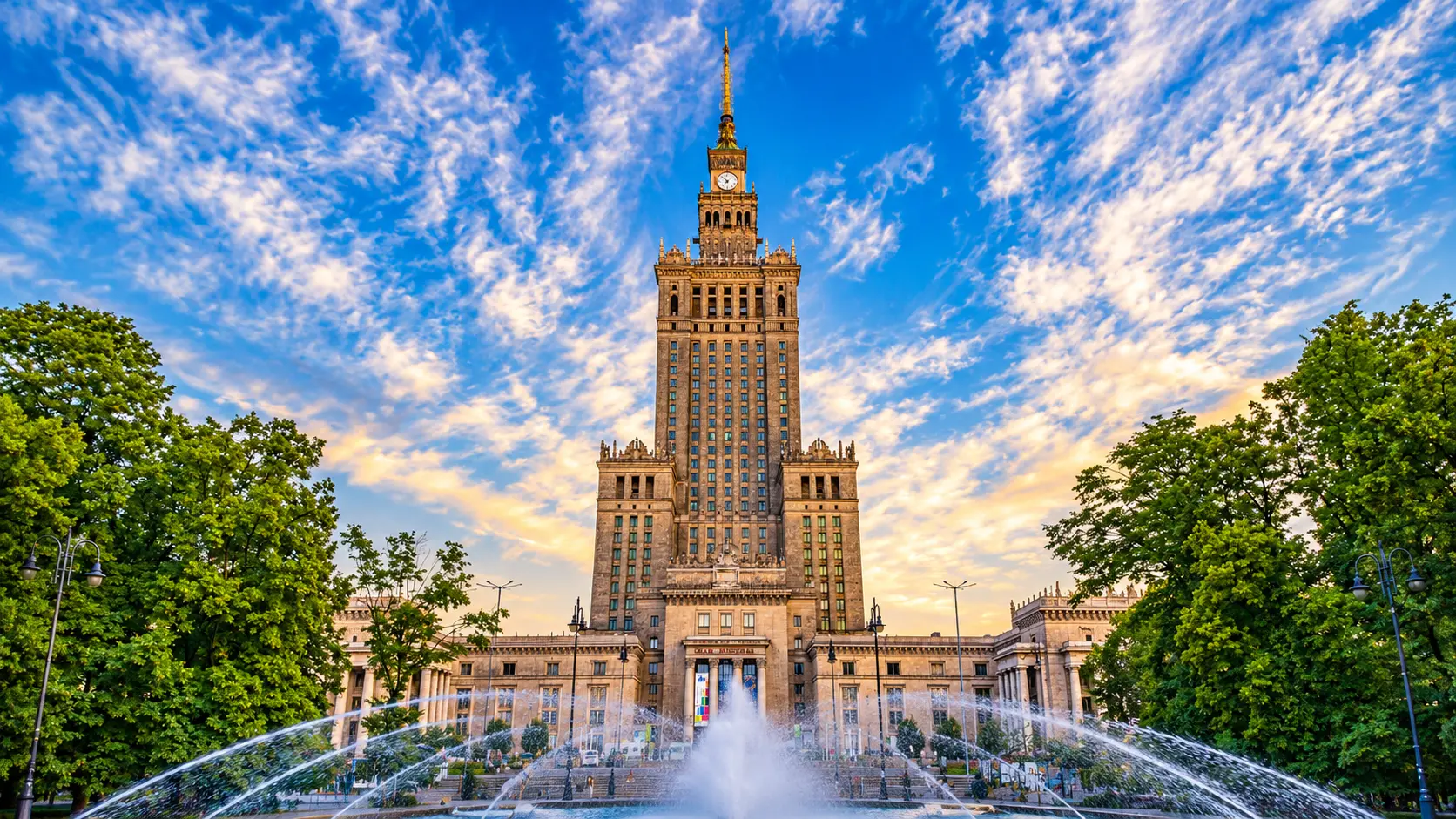
The Palace of Culture and Science is easy to recognize and less easy to summarize. Its tower belongs to the familiar image of Warsaw, but the building also carries the political meanings of the period in which it was created. Later generations have encountered it through performances, exhibitions, education and everyday movement around the center. A useful visit keeps those layers together. It can be an architectural stop, a way to orient yourself above the city or an introduction to the changing public spaces around Plac Defilad.
A building shaped by its political moment
Construction began in 1952, and the palace opened to visitors in 1955. The project was agreed between the Soviet and Polish governments and originally carried Stalin’s name. Those origins place it firmly within the political order of postwar communist Poland.
That history should not disappear behind the convenient description of a city landmark. Equally, understanding the building requires more than repeating its original political message. A visitor can acknowledge the conditions of its creation while also observing the uses and meanings it acquired afterward.
The most useful question is not whether the palace has one correct interpretation, but how a city lives with a highly visible inheritance.
Look at the base as well as the tower
The spire draws attention from a distance, but the lower parts of the complex reveal its scale more directly. Walk far enough around the exterior to compare the central tower with the wings, entrances and broad spaces at ground level.
Notice how the building organizes its surroundings. This is a very different encounter with public space from the narrow streets of the Old Town or the sequence of facades on the Royal Route. The contrast can form the basis of an architectural walk without requiring access to every interior.
Avoid reducing the comparison to old versus new. The palace, the reconstructed historic center and contemporary buildings represent different choices about what a capital should look like.
Culture behind the monumental exterior
The palace houses cultural and educational institutions, with theaters, a cinema, museums and event spaces forming part of its public life. That variety is important: it is not one enormous museum with a single exhibition route.
A performance, an exhibition and a terrace visit may involve different operators and admission arrangements. Choose the specific experience you want rather than buying into the assumption that one entry opens the entire building.
For a guided architectural visit, confirm which interiors are included. The promise should be about an agreed route, not unrestricted access to a working complex.
Use the terrace to read the city
The viewing terrace is on the thirtieth floor. When access and visibility allow, it offers a way to connect the skyline with the streets you have explored below.
Rather than treating the visit only as a photograph, look for changes in scale and density. Consider which directions reveal office towers, older streets or more open areas. The point is to understand relationships that can be difficult to see from ground level.
Weather and current operating arrangements affect the experience. A terrace reservation is not a guarantee of a clear panoramic view.
Continue into the changing center
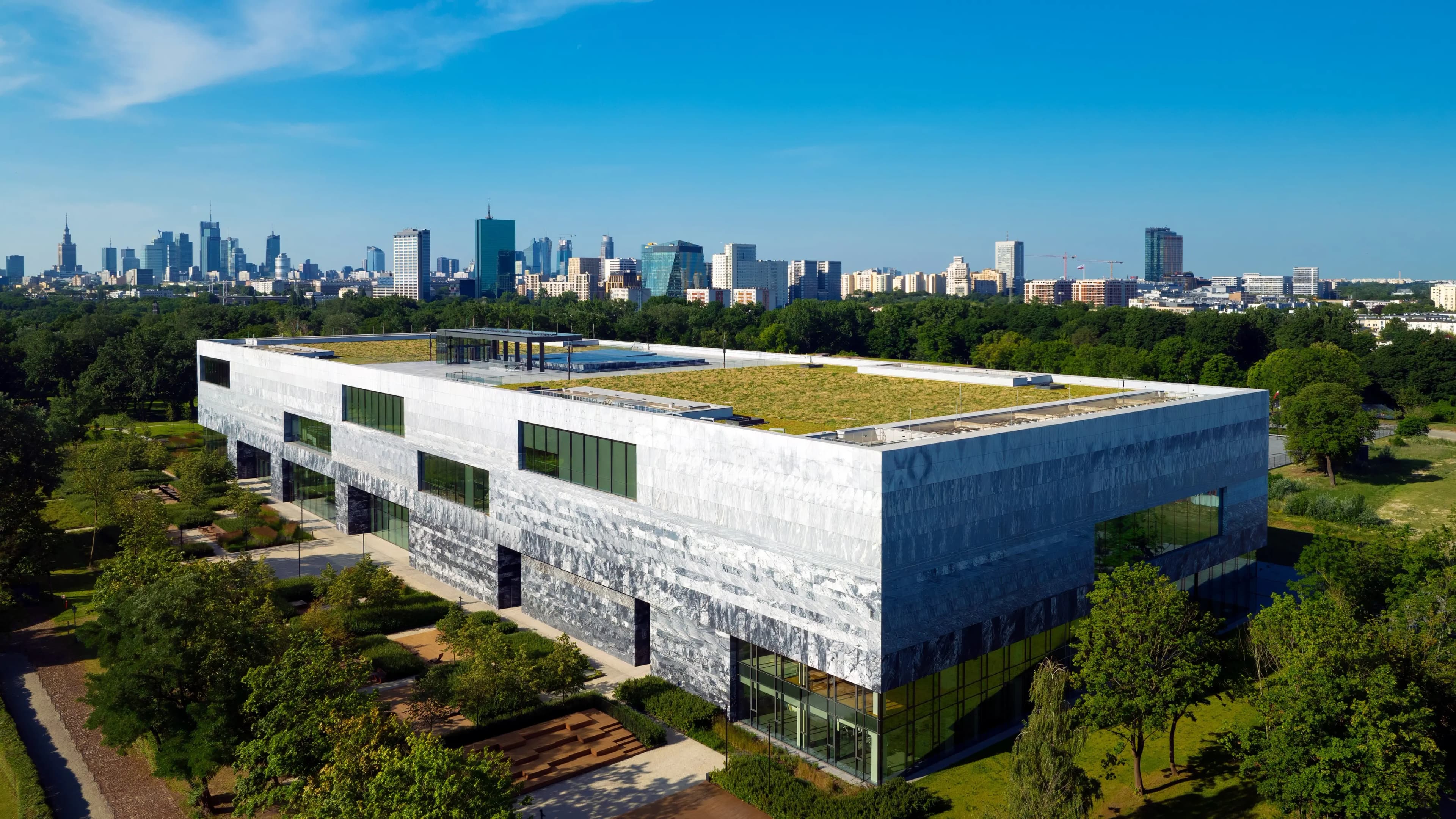
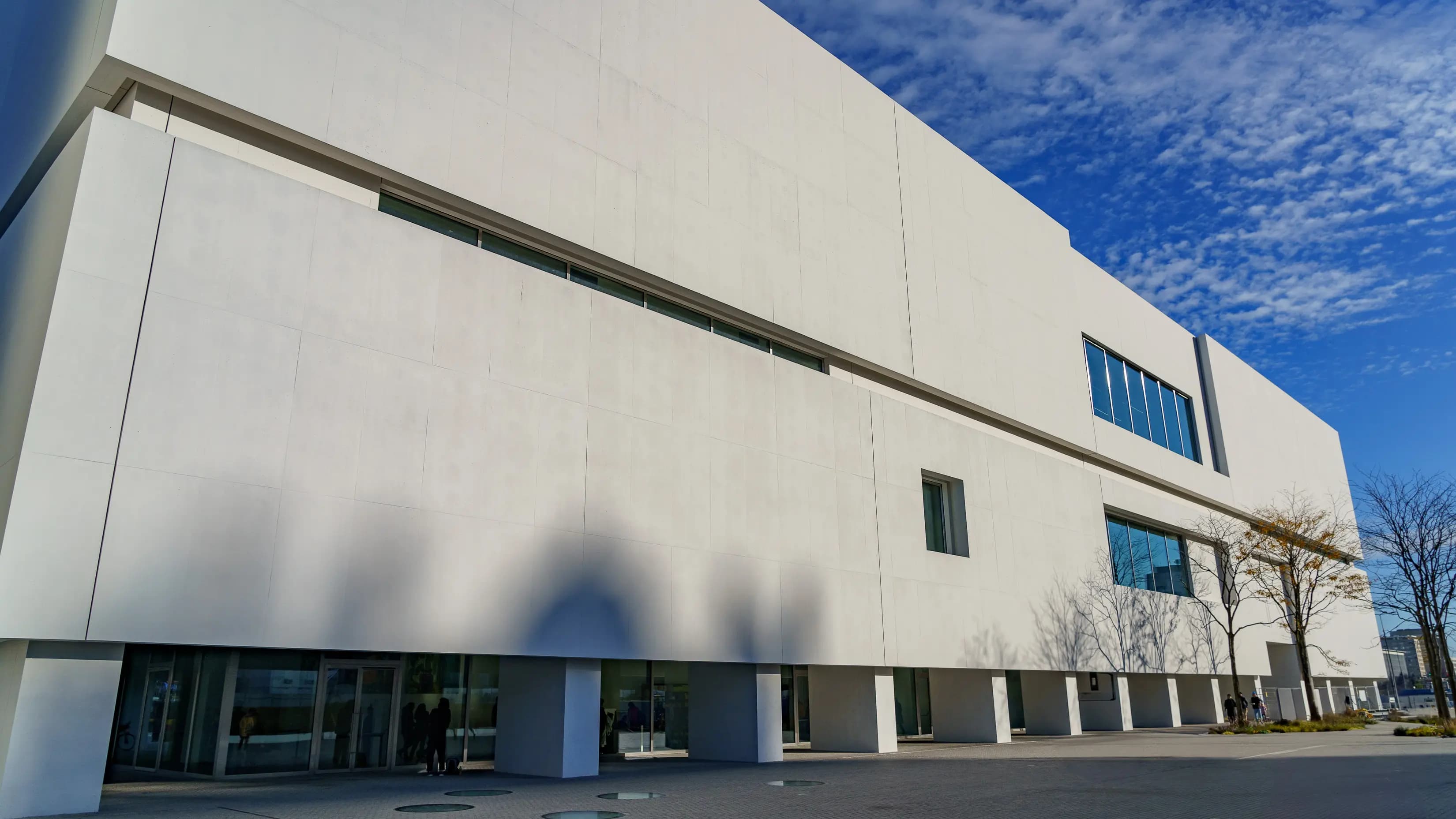
The nearby Museum of Modern Art provides a contemporary counterpoint to the palace. Pairing the two creates a day about architecture and cultural life rather than two unrelated stops.
Our Museum of Modern Art guide focuses on its collections and exhibition-led program. For a longer historical perspective on the city’s changing appearance, use the Museum of Warsaw guide. Together, these connections help place the palace within a continuing urban story instead of leaving it as an isolated monument.
YOUR WARSAW VISIT
See Warsaw your way
From an Old Town walk to a longer stay in the capital, tell us what you would like to experience. Share your dates, group size and interests, and we will help shape a visit around you.
Museum of Modern Art
Warsaw Old Town and Castle Square